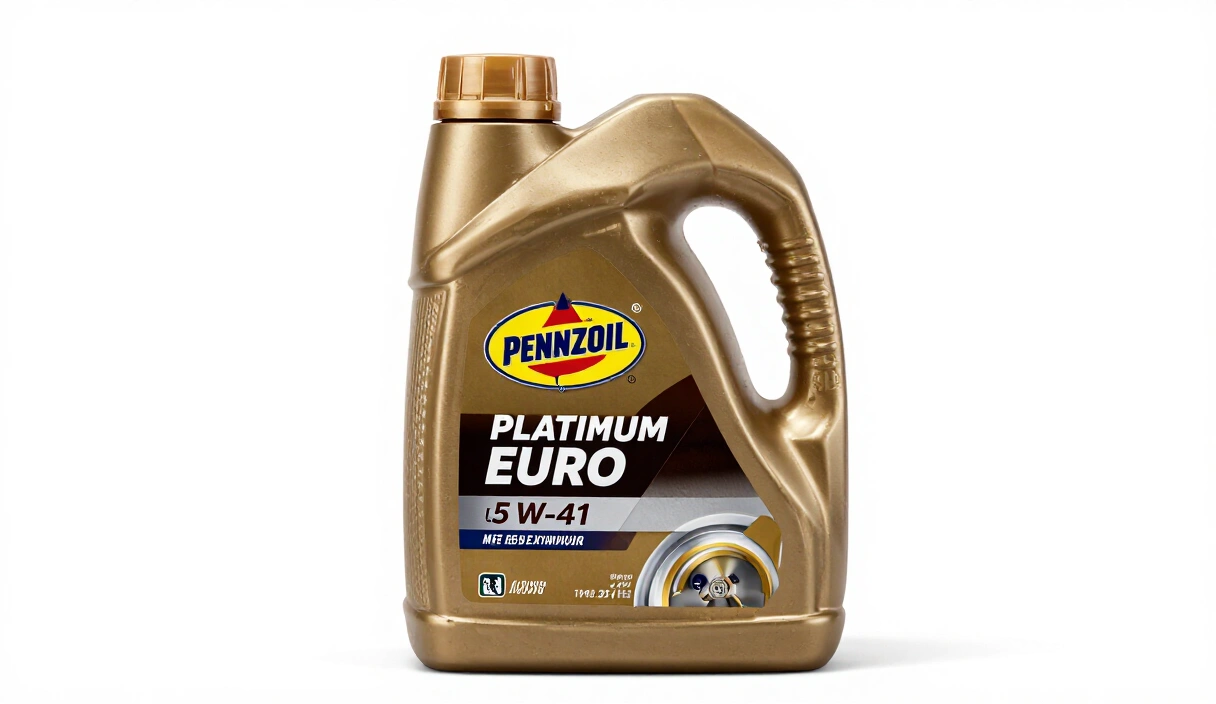
Pennzoil Platinum Euro L 5W-40: Which Bottle Meets MS-12991
There is no bottle called Pennzoil Platinum Euro L 5W-40. The MS-12991 oil for a Ram EcoDiesel is the Euro 5W-40, and the L 5W-30 is a different animal. Here is how to tell them apart at the shelf.
Contents
AutoZone, aisle nine, half past six on a Saturday. A guy is standing there with two yellow jugs in his hands, phone in the crook of his elbow, reading the back labels out loud to whoever is on the other end of the line. One jug says Euro L. The other says Euro. Both say 5W-something. He has been there long enough that the employee has stopped asking if he needs help.
He is not confused because he is careless. He is confused because the thing he searched for does not exist.
Two Bottles, One Confusing Name
Here is the thing that clears it up in one sentence: Pennzoil does not sell a product called “Platinum Euro L 5W-40.” There are two different bottles, and the query most people type — including the one that led you here — merges their names and their grades into a chimera that isn’t on any shelf.
The two real products:
- Pennzoil Platinum Euro L 5W-30 — the “L” bottle. ACEA C3, mid-SAPS, aimed at European diesels and gasoline engines with aftertreatment hardware.
- Pennzoil Platinum Euro 5W-40 — no L. A thicker, higher-HTHS formulation that carries the Chrysler/FCA approval line for the 3.0L diesel.
The “L” is not a trim level or a packaging variant of the same oil. It marks a different product with a different approval stack. And the grade difference — 5W-30 versus 5W-40 — is the part that matters if you own a Ram EcoDiesel, because that engine’s specification names a grade.
The funny thing is that the confusion is almost entirely an artifact of search. Type “pennzoil platinum euro l 5w-40” into Google and you get a wall of retailer listings that blend both products into one page of results: the Euro L 5W-30 jug shows up as result six, the Euro 5W-40 shows up at four, five, and seven. Nobody ranks a page that just says “these are two different oils, here’s which one you need” — which is why the forum threads asking the question sit at the top.
Quick check: If your owner’s manual says Chrysler MS-12991, the bottle you want is the 5W-40. If it says BMW Longlife-04 or VW 504 00, it is probably the L 5W-30. Same brand, same family name, different oil.
What Chrysler MS-12991 Actually Requires
Chrysler MS-12991 is an FCA material standard, and it exists for one specific reason: the 3.0L EcoDiesel in the Ram 1500 and Jeep Grand Cherokee is a VM Motori design with a diesel particulate filter and a documented appetite for the wrong oil.
What the standard locks down:
- Grade: 5W-40. Not a range, not “5W-30 is fine in cold climates.” A grade.
- Chemistry: mid-SAPS, ACEA C3-level. Sulfated ash has to stay low enough that the DPF doesn’t load up with ash it can never burn off.
- HTHS Viscosity: 3.5 cP minimum at 150 °C. High-temperature, high-shear is the number that predicts whether a film survives in a bearing under load, and it is the reason this engine doesn’t want a thin oil.
That last point is where most online explanations go sideways, so let me be straight: HTHS Viscosity is not what disqualifies the L 5W-30. ACEA C3 already requires HTHS ≥ 3.5 across every grade in the category — that floor is precisely what separates C3 from C2 and C5. So a C3 5W-30 clears the HTHS bar by definition.
Worth knowing: ACEA C3 = mid-SAPS plus HTHS ≥ 3.5. C2 is the same SAPS window with HTHS ≥ 2.9. C5 drops to ≥ 2.6. If a bottle says C3, the shear stability is already there.
What the L 5W-30 fails is the grade and the approval. MS-12991 names 5W-40, and the approval line on the bottle is a per-product license, not an inheritable family trait. The 5W-40 sibling holds it. The 5W-30 does not.
Reading the Approval Line in 30 Seconds
Here is the honest part: you do not need to trust me, a forum, or a retailer’s product title. The bottle has to tell you.
Turn the jug around. Below the API donut and the ILSAC starburst there is a block of text — the OEM approval list. On the Euro 5W-40 your eyes are looking for the literal string MS-12991 next to the Chrysler or FCA name. Not “meets or exceeds.” Not “recommended for.” The spec number, printed.
What I look for: a spec number printed by the manufacturer, not added by the retailer. Amazon listing copy is written by sellers and rewritten by bots. The back label is written under license.
Three things that do not prove the oil is right for a Ram EcoDiesel:
- API SP. Every modern oil has it. It says nothing about 5W-40 or about a diesel aftertreatment spec.
- “European formula” on the front. Marketing language, unregulated, appears on everything from A3/B4 to C5.
- ACEA C3 alone. Necessary, not sufficient — the EcoDiesel wants C3 and 5W-40 and the FCA license.
Approval lists get revised, and Shell has moved products between bottle designs before. The back label on the jug in your hand outranks any article, including this one. That is not a hedge — it is the actual purchasing procedure.
Where the Euro L 5W-30 Fits — and Where It Does Not
The Euro L 5W-30 is a genuinely good oil. It sits in the same approval neighbourhood as the oils I’d recommend for a BMW N20 or a VW TDI, and its mid-SAPS chemistry is the correct answer for engines that spec BMW Longlife-04, Mercedes 229.51, VW 504 00/507 00, or Porsche C30.
Quick check: a BMW owner and a Ram EcoDiesel owner can both be pointed at “Pennzoil Platinum Euro” and both end up with the wrong jug. The BMW wants the L 5W-30. The Ram wants the 5W-40.
Where it does not fit is the EcoDiesel, and the mechanism is worth understanding because it is not mysterious. A 5W-30 has a lower kinematic viscosity at 100 °C than a 5W-40 — that is what the grade means. In an engine whose bearings and injection pump were validated against a 5W-40 oil film, the thinner oil runs a smaller margin under sustained load: towing, summer grades, long climbs, high EGTs. Mid-SAPS protects the DPF either way. Film thickness at temperature is the difference.
If you want the longer version of how these standards stack against each other, I wrote up ACEA C3 compared with Stellantis MS-12991 separately, including why the two specs get quoted interchangeably on forums. And if you have a European gasoline car rather than a diesel, the BMW Longlife-04 approved oils list is a better starting point than this page.
What Happens If You Run the Wrong One
Short answer: probably nothing you notice this month. Longer answer: something you notice at 120,000 miles, or at the moment a service writer asks for oil change receipts during a warranty claim.
The used-oil pattern on EcoDiesels run on 5W-30 instead of the specced 5W-40 tends to show viscosity shearing down faster in the first few thousand miles — the oil starts at a lower grade and has less room to fall. You will not feel that. What you might feel, eventually, is a slightly noisier valvetrain on cold start and a slower oil pressure rise.
FCA’s warranty language is less forgiving than the physics. The manual specifies the oil by grade and by standard, and “the dealer used what they had” is not a defence. This is the part that makes me frustrated with the whole category: the information is available, it is printed on the bottle, and the product naming does everything in its power to hide it behind two adjacent letters.
Worth knowing: the same engine family in a Jeep Grand Cherokee has the same requirement. Same spec, same jug, same trap.
How to Buy It Without Getting the Wrong Jug
Three practical notes before checkout, because the SKUs are close enough to grab the wrong one by accident.
Grade first, then name. Say the grade out loud before you look at the shelf: 5W-40. If the jug in your hand is 5W-30, put it back regardless of how the front label reads.
Quarts versus the 5-quart jug. The EcoDiesel takes more than a 5-quart jug in a full change with filter — check your manual for the exact capacity rather than assuming the big jug is enough. Buying four individual quarts to top up the difference is normal for this engine.
Verify at the shelf, not at checkout. Once the oil is in the cart, the incentive to re-read the label disappears. Flip the jug in the aisle, find MS-12991, then buy.
Euro 5W-40 Oils — Check the Label Before You Buy
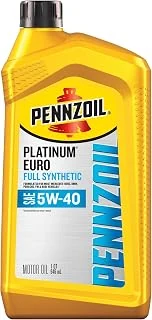
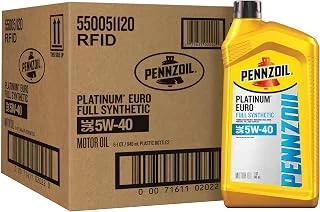
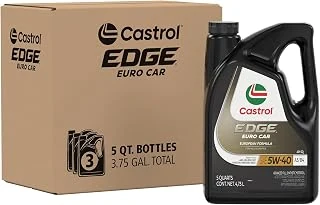
* Affiliate links. Prices last updated November 11, 2026.
Note what that grid does not claim: the Castrol is an A3/B4 European 5W-40, not an MS-12991 product, and it sits there because comparing an approved bottle against a non-approved one on the same shelf is the fastest way to see why the approval line matters. Pennzoil Platinum Euro 5W-40 is the bottle to check for the FCA spec number.
If you are still narrowing down what the ACEA letters actually mean before you commit, start with what ACEA C3 motor oil actually requires — it is the shortest path from “C3” to “is this the right bottle for my engine.”
Frequently Asked Questions
Is Pennzoil Platinum Euro L 5W-40 the same oil as Pennzoil Platinum Euro 5W-40?
No. The “L” designates a separate product that is sold in 5W-30. The 5W-40 bottle carries no L in its name and holds the Chrysler MS-12991 approval. If you searched for a combined name, you were searching for two products at once.
What does Chrysler MS-12991 mean?
It is an FCA material standard for the 3.0L EcoDiesel, specifying a 5W-40, mid-SAPS, high-HTHS oil for engines with diesel particulate filters. The spec number is printed on the back of qualifying bottles.
Can I use an ACEA C3 5W-30 instead of an MS-12991 oil?
No. The mismatch is the grade, not the chemistry — C3 already requires HTHS ≥ 3.5 in every grade, so the L 5W-30 clears the shear bar. It simply is not a 5W-40 and does not hold the FCA license.
Is MS-12991 oil sold at Walmart or AutoZone?
Sometimes. Availability varies by store and season, and store-brand listings on retailer sites frequently merge the 5W-30 and 5W-40 products into one page. Check the printed spec on the jug you actually take off the shelf.
Does MS-12991 require a specific HTHS viscosity?
Yes — 3.5 cP minimum at 150 °C. That floor is standard across ACEA C3, which is why the grade and the individual FCA approval are what actually separate a qualifying oil from a near miss.
Your Next Step
Walk to the shelf with one question: does the back label print MS-12991 next to the Chrysler name, on a 5W-40 jug without an L on the front?
If yes, buy it. If the bottle says Euro L, it is the 5W-30 and it is the wrong oil for a Ram EcoDiesel — useful oil for a BMW, wrong oil for your truck. And if the label is ambiguous or the spec line is missing, that is your answer too: the approval is not there, so the oil is not either.